

A Cornell University study tracking the effect of psilocybin on depression allows for a better understanding not only of psilocybin, but of depression, the brain, and the human experience.
Rarely does a psychedelic study create a tsunami wave that ripples well outside of the psychedelics community. That is exactly what happened when researchers at Cornell University published a study using rabies virus to track the effect of psilocybin on the brain. This paper, perhaps unintentionally, revealed something greater than it was set out to discover, offering a better understanding of the mechanisms not only of psilocybin but of depression, the brain and the human experience.
Some background
Depression is said to affect some 350 million individuals worldwide or 4.4% of the population according to the WHO (World Health Organization). About a third to half of those who are prescribed antidepressants will not experience ease of symptoms due to those meds. We cannot cure something we do not understand. The prevailing treatment for depression, namely antidepressants, is ineffective as it stems from a partial understanding, if not a misunderstanding, of depression. Most depression treatments treat depression as a disease of neurons. What we come to understand is: Depression is a disease of neurons as much as traffic is a disease of cars.
Depression is a disease of neurons as much as traffic is a disease of cars.
While traffic is experienced by cars, the solution for traffic lies outside of them in understanding and addressing the connectivity of roads and the aggregated flow across them. This research as well as countless other ones support that understanding.
Traffic and depression, the OG Analogy
I have long used the analogy of traffic to describe the effect of psychedelics on the brain. Not only did this research arrive at a very similar, if not identical, language, but its fascinating findings allowed me to further refine my analogy.
Interestingly, famed researcher Robin Carhart-Harris released a video of how he too updated his (very different) language in a rather similar fashion.
Here is a brief reference to my OG traffic analogy to depression, Psychedelics and the brain: “Think of your brain as a large metropolis. The Default Mode Network is like its busiest streets; often if not always jammed with traffic, even when not much is happening. Now imagine a parade or a marathon was to take place, the normal traffic would have to be diverted. People trying to move around the city while those streets have alternate use, must find alternate routes. Decreased activity in the DMN (the main streets) makes way for new neural pathways to emerge through lesser-used connections (alternative routes). This can manifest as a new perspective, increased creativity, self-compassion, forgiveness, inspiration, motivation, and more.” I further referred in that article to the trajectory of a trip, referring to a study published in Nature, detailing how one must often break down (alternate use) to break through (new pathways).
Enter rabies research.
Scientists at Cornell University were interested in understanding how is it that a single psilocybin session can have long-lasting effects on the brain. The head researcher, Quan Jiang, framed the inquiry in traffic terms: “With psilocybin, it’s like we’re adding all these roads to the brain, but we don’t know where the roads go.”
Instead of using the traditional fMRI (functional Magnetic Resonance Imaging) to image individual synaptic connections, researchers stripped nature’s deadliest pathogen, namely rabies, of its ability to kill and used it as a microscopic tracer to map exactly how psilocybin rebuilds neural circuits. That approach addresses many if not all of the concerns around psychedelics research in human subjects, one of which is functional unblinding. Psychedelics work too well for the control group not to know they got the placebo, as brilliantly illustrated below.
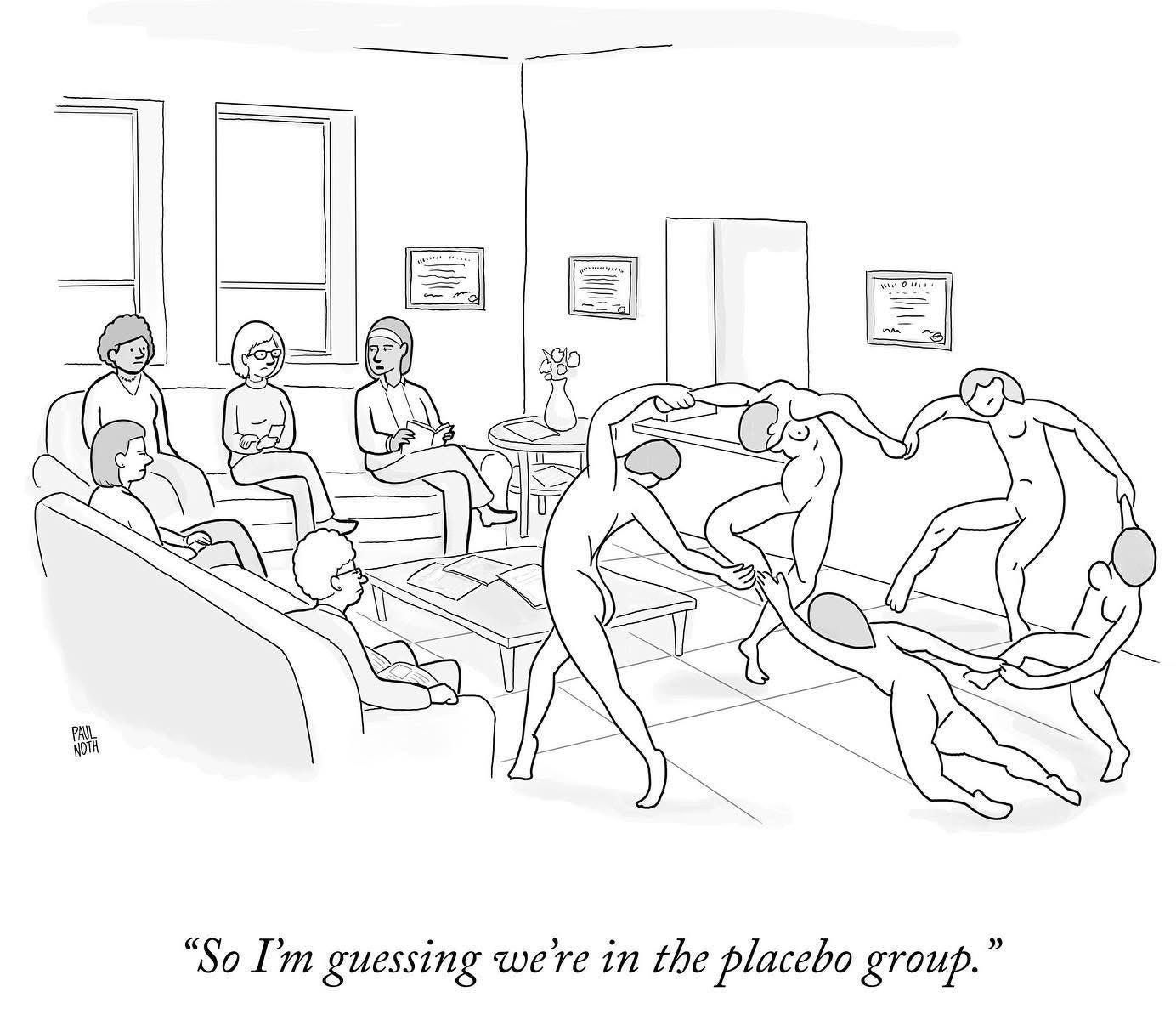
Read the full paper here: Psilocybin triggers an activity-dependent rewiring of large-scale cortical networks. It’s a dense read. I include below a reader-friendly summary.
The research process (Optional, you can jump ahead)
Rabies naturally travels backwards through the nervous system. Scientists engineered it to jump just one neuron at a time.
On day 1 the Frontal cortex was injected with helper virus. On day 14 they injected psilocybin to the study group versus saline to the control group. On day 16 rabies was injected, along with the tracing highlighter. On day 21 the brains were harvested. Light sheet microscopy was then used to trace the effects. Every single green-highlighted neuron was counted. To understand the level of detail consider the following:
Over half a million inputs of each brain were collected.
Every one of these findings was in turn mapped to one of 316 brain regions. No previous research has mapped psilocybin’s effect across the entire brain.
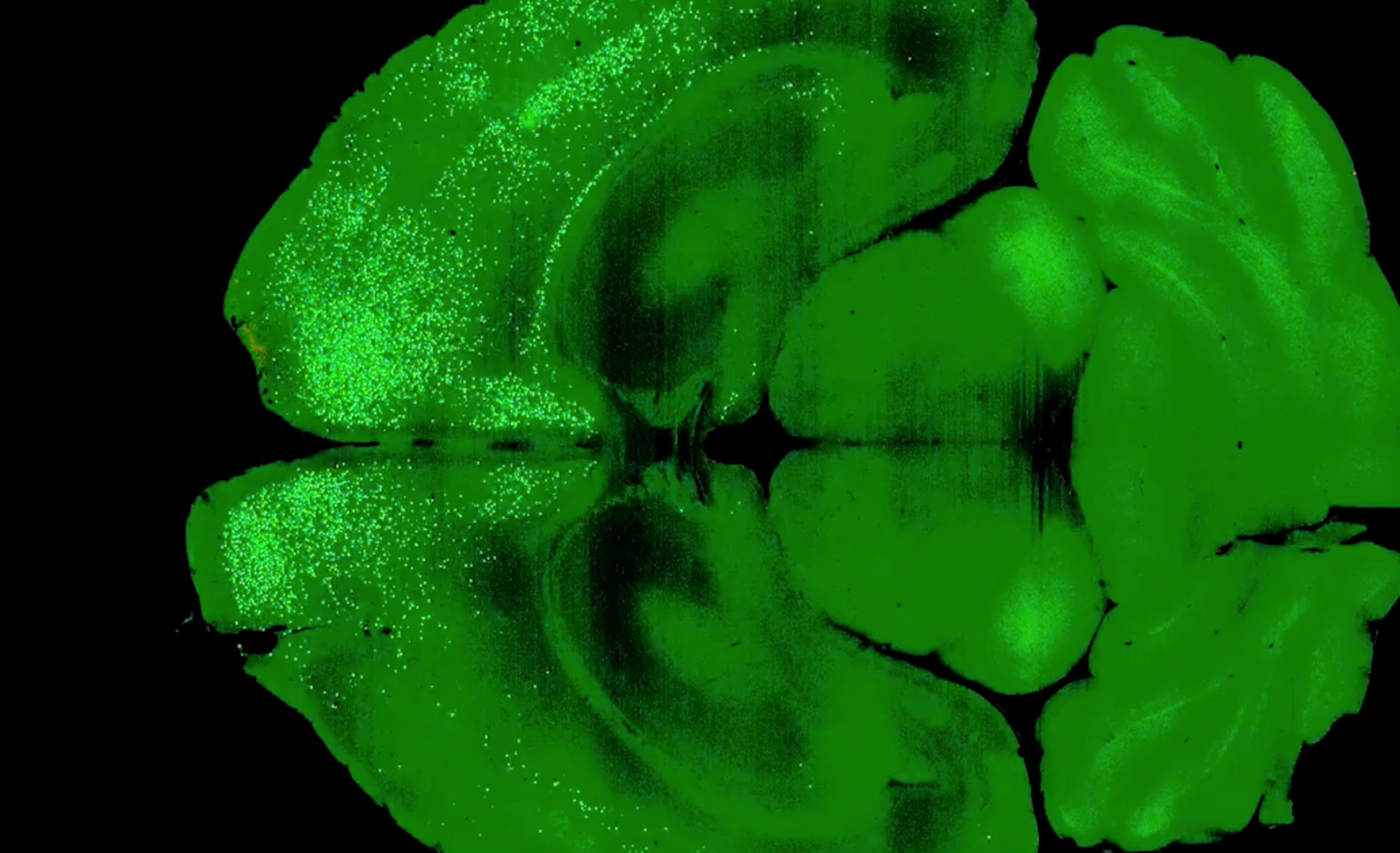
The findings
The expectation was to see randomness. As Quan Jiang said- we didn’t know where these new roads lead. What was observed was all but random.
In fact the odds of it happening by chance are so slim, p = 0.00006.
There was a pattern as to which pathways got weaker and which got stronger.
What got Stronger? The connections that got stronger were all sensory, and they have seen a major 10% increase. These regions include: The Primary somatosensory cortex, Primary visual cortex, Motor cortex and Retrosplenial cortex. All these areas are responsible for our actual lived sensory reality.
Psilocybin literally brings us back to our senses. It strengthens one’s connection to their senses, 3D reality and the external world.What got Weaker? The connections that got weaker can all be classified as contributing to our internal narrative. These regions have seen a staggering 15% decrease. These regions include: The Infralimbic area, Insula, Hippocampus, Amygdala and Orbitofrontal cortex. Psilocybin quiets down the regions associated with our Internal narrative, the default mode network, regions responsible for depression, anxiety, fear and ruminating thoughts.
What was unchanged? Researchers completely silenced an area of the brain during the experiment. This region experienced no change, further showing that the rewiring is experience-dependent and programmable.
The study shows that psilocybin redirects traffic. It weakens the loops that trap people in depression, anxiety, trauma, fear responses and ruminating thoughts and brings us back to our senses, quite literally. It is no wonder people experience psilocybin as “Coming to”. Psilocybin brings us back to 3D reality and temporarily erases, and thereby weakens, imagined internal reality. Some new neural pathways remain for weeks, some are permanent. The durability of the structural remodeling in the brain may explain how psilocybin, which has a short half-life in the body, can cause sustained changes in behavior.
Traffic and depression: Analogy 2.0
Having read this research, I now humbly update my analogy:
Psilocybin is to the brain what Waze is to traffic.
In the past I likened the effect of psychedelics to the shutting down of the busy streets for a parade or a marathon, and how that forces traffic to find alternative pathways. My current understanding is that: Psilocybin is to the brain what Waze is to traffic. Much like the Waze algorithm, psilocybin diverts traffic from jammed regions onto less traveled ones. Drivers who took alternative paths are more likely to take them again- hence the lingering effect of said neuroplasticity.

How Robin Carhart-Harris’ language evolved:
It is fascinating when different thinkers in a field arrive at similar language (see my post re Creativity) or move in a similar direction over time.
Shortly after I have updated my analogy, I came across this video of Psychopharmacologist and thought leader Robin Carhart-Harris, indicating his language evolved in a rather similar fashion.
- Carthart-Harris: “Psychedelics break chunked stuff down into smaller bits, so it’s finer, finer grained, temporarily, patterns in the brain are finer grained rather than coarse grained. In normal waking consciousness you see these big patterns like the Default Mode Network is a very popular network system in the brain that people often refer to.”
- Interviewer: “There’s something about it shutting down”
- Carthart-Harris: “Yea, it doesn’t shut down. That’s sort of sloppy language, I used it once upon a time, but I don’t these days. It doesn’t shut down. It scrambles up. it gets entropic. It gets bittier. Its boundaries break down and it bleeds into other systems. You’re breaking chunked stuff, so coarse grain stuff and slow stuff down into faster and finer activity, spatiotemporally, it’s faster and finer.”
Practical takeaways
You now have a better understanding how psilocybin heals the brain, have a sound-bite you can share with others, sound smart and hopefully leave them knowing better. But better than knowing better is doing better. How can you engage with psilocybin and other classical psychedelics better based on the above? Having spent 20+ years dancing through the world with medicine, I narrowed it down to some suggestions.
Next time when entering an altered state- be it a hiking trip/ a sound journey/ a therapeutic session or a medicine ceremony, consider the following:
Before: Preparation + Intention. Psychedelics, done right, are like a cleaning team to your system. If a cleaning team was to enter your home for a deep clean you’d know some discomfort is on the horizon. Vacuums may be buzzing, furniture may be moving around. You’d have to be consulted on where things go. Similarly, when entering an altered state experience, consider the following: Discomfort is 100% on the menu. That discomfort is temporary, and done right- it should leave you better. When entering a big process, plan accordingly. Allow for a window of no distractions during and after. Have an intention, and hold it loosely. Intention ≠ expectation. The work may run much deeper than you expect.
During: Narration + Direction. There is so much that can be said here, I’ll keep it to a couple of basics. Things that come up while we’re altered tend to have a certain directionality. Some things are to be released (OUT). Some parts are to be integrated (IN). Some things are to be observed, felt, seen and transmuted. When considering altered space, go beyond Set and Setting. Choose wisely your companion / sitter / server / guide and if you are to do it solo- your own narration. When discomfort arises, allow it. Engage with curiosity, and neutrality. When you can- orient to the basics: Safety, Agency, Sovereignty. To heal deeply one needs to reach deeply, a tumor is not removed in a massage. Consider what is the healed version of what is asking to transmute. Control (rigid, futile) may transmute into Agency (elastic, attainable); Savior (I got you) may transmute into Coach (I am with you); Victim (Life happens to me) may transmute into Creator (Life is by me, for me); Consumption (phone addiction, anyone?) into Creation (enter yours). The list goes on.
After: Integration + Connection. Need I not tell you, herein begins the real work. Know that just like after a successful surgery one may be left feeling more tender than they did coming in, so is the case post altered-state engagement. Leave time to integrate. Tend to your body: Hydrate, sleep, work out if even lightly, be in nature, ground, journal, nourish well. Mind your emotional boundaries- if one was to come home from a surgery- if a healthy loving dog was to lick their fresh stitches that cause an infection. Don’t make big decisions for at least 72 hours. Let the dust settle. If you feel immediate urge to communicate something perhaps write a letter or record a voice note and revisit a couple of days later. Consider taking on a small commitment- to stop or start something, do more or less of it, or do it differently. Instead of: “I’ll do yoga every day” try: “I commit to an embodiment practice 3 times a week for a year”. Perhaps most importantly, remember that at the end of self work we are not just better selves. Successful self work connects us to something bigger than ourselves. Foster and tend to your connection to purpose, service, nature, community.
This study revealed more than it intended to
What may go unnoticed when reading this article and its findings, is that it actually revealed more than it intended to. This study offers not only a new understanding of psilocybin, but of depression, the brain and the human condition. Its findings show in no uncertain terms, what may have only been speculated before: The human condition can be understood through two aspects of its being:
1- Our sensory experience of the external world.
2- Our internal narrative within.
While we are trained to think of the two as deeply intertwined (outside of spiritual traditions, the internal is thought of largely as a response to the external). This study shows that these two categories are somewhat independent. Many emotional and mental afflictions can be traced to an imbalance between the two, namely when we lose touch with the first (Sensory / External) and lean too heavily into the latter (Narrative / Internal). This understanding of those ailments allows us to offer better solutions to them. The remedy to depression, anxiety and other ailments, are more likely to be found on your plate, on your mat, in the gym, in service, on the dance floor, on a hike, in connection to nature, community, purpose etc, than in a daily pharmaceutical dose of any kind. Instead of the vehicles/ neurons, tend to the connectivity. Within and without.
Here hoping this piece leaves you knowing, and doing, better.
_____
Other posts that may tickle your fancy:


Fantastic breakdown of the Cornell study. The shift from cellular to systems-level understanding mirrors broader shifts happening in medicine. The sensory vs narrative distinction you pull out is really what makes this research significant beyond just psychedelics. Experienced this personally after a facilitated session, where returning to embodied experience felt like remebering something that was there all along.
This article helps make so much sense of my experience with psilocybin and lifelong-depression and trauma. For me, the medicine has truly been like using Waze in a traffic jam and has helped in ways that antidepressants never have.